Basmati or regular rice: which is better for blood sugar?
Short answer
Basmati is the better pick for blood sugar. It has a lower GI (58 vs 73), and a usual serving has a glycemic load of 22 against 30 for regular rice.
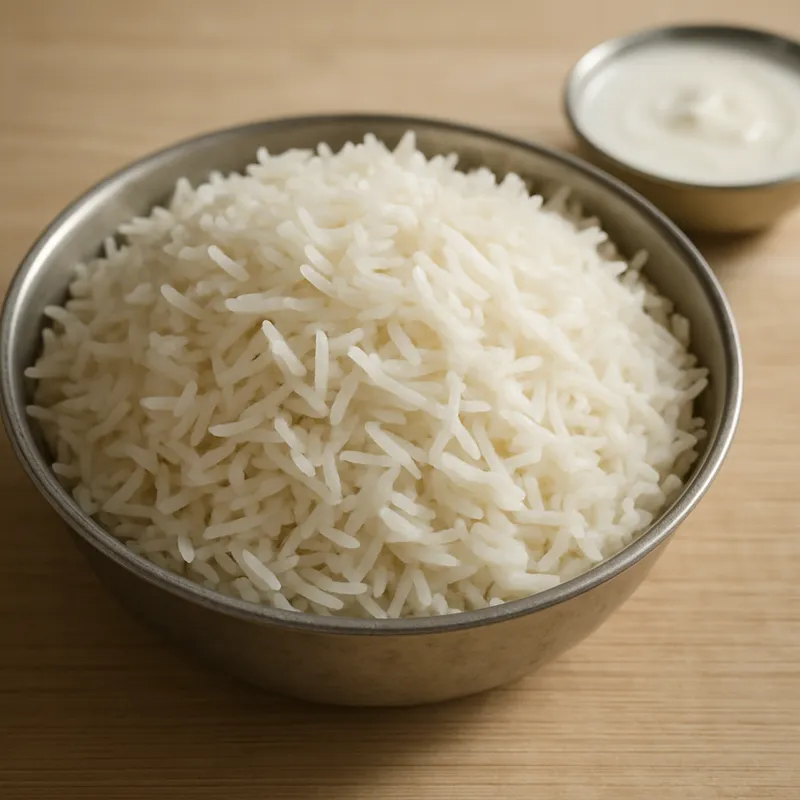 Better pick
Basmati Rice
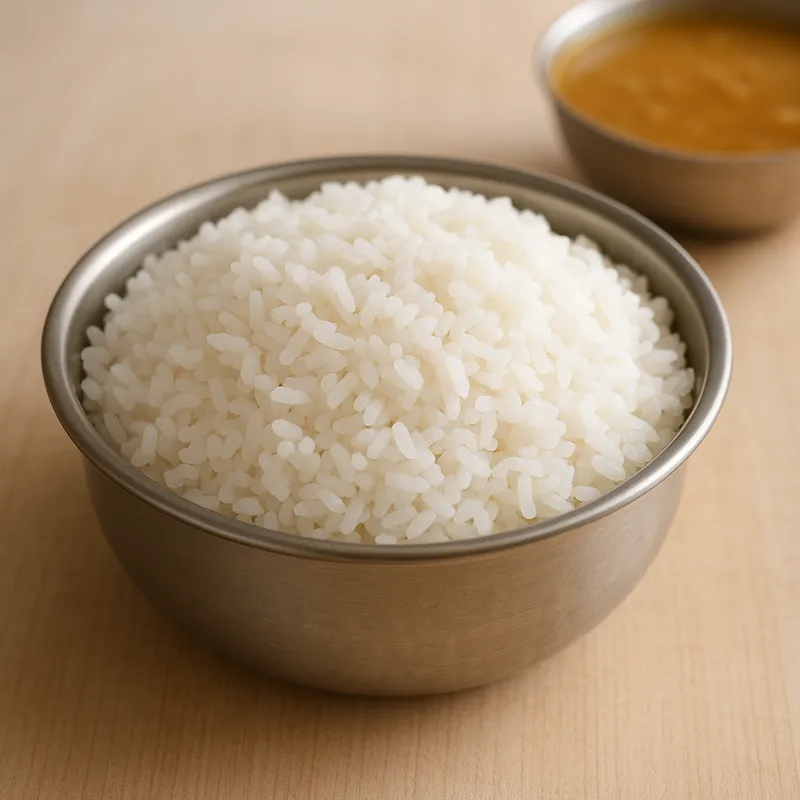
White Rice (Polished)
| Per usual serving | Basmati | Regular rice |
|---|---|---|
| Glycemic index | 58 | 73 |
| Glycemic load per serving | 22 | 30 |
| Carbohydrates | 42 g | 44 g |
| Fiber | 0.8 g | 0.6 g |
| Protein | 4.5 g | 4 g |
| Sugars | 0.1 g | 0.1 g |
| Calories | 190 kcal | 195 kcal |
| Serving | 1 medium bowl (cooked) | 1 medium bowl (cooked) |
Highlighted values are the better of the two for blood sugar. Glycemic load counts the portion as well as the GI, so it is the fairer comparison when serving sizes differ.
What makes the difference
Long-grain basmati has more amylose starch, which digests more slowly than short-grain polished rice. It still adds up quickly, so portion size matters more than the variety.
How to eat basmati rice with less of a spike
Rinse thoroughly and soak 20 minutes before cooking. The long grain structure gives it a naturally lower GI than short-grain varieties.
How to eat white rice with less of a spike
Cool cooked rice in the fridge for 12+ hours to increase resistant starch and lower effective GI. Reheating doesn't reverse this benefit.
Common questions
Which is better for diabetes, basmati or regular rice?
Basmati is the better pick for blood sugar. It has a lower GI (58 vs 73), and a usual serving has a glycemic load of 22 against 30 for regular rice.
What is the glycemic index of basmati and regular rice?
Basmati Rice has a GI of 58 (medium) and White Rice (Polished) has a GI of 73 (high). Glycemic load is 22 for basmati and 30 for regular rice, based on usual servings of 1 medium bowl (cooked) and 1 medium bowl (cooked).
Basmati chawal ya safed chawal, sugar ke mareez ke liye kya behtar hai?
Basmati chawal behtar hai. Iska GI 58 hai, jabki safed chawal ka GI 73 hai. Phir bhi chhoti portion lein aur dal, sabzi ya dahi ke saath khayein.