Rice or roti: which is better for blood sugar?
Short answer
Roti is the better pick for blood sugar. It has a lower GI (62 vs 73), and a usual serving has a glycemic load of 12 against 30 for rice.
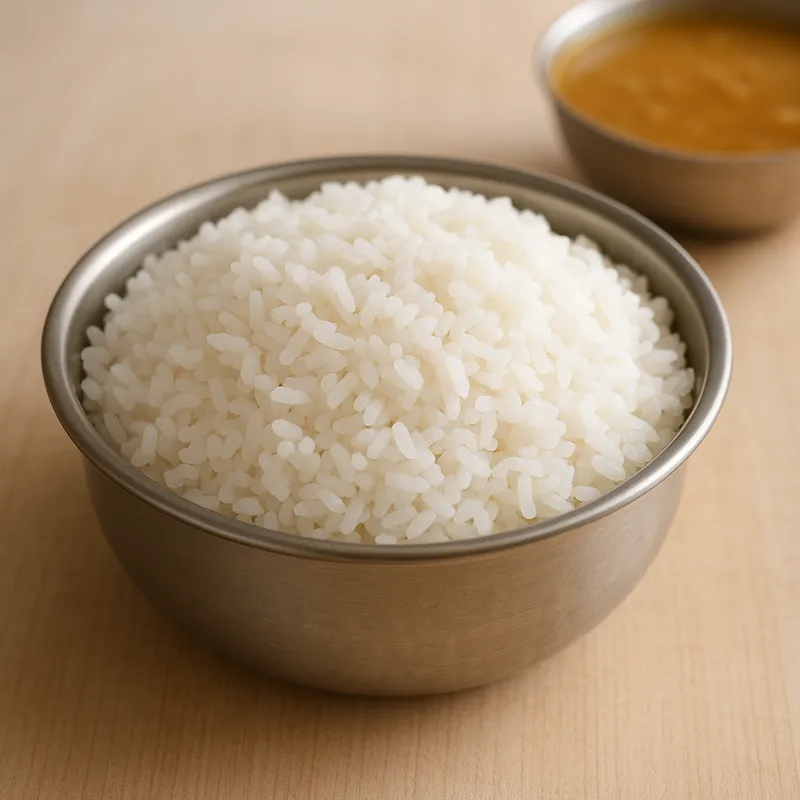
White Rice (Polished)
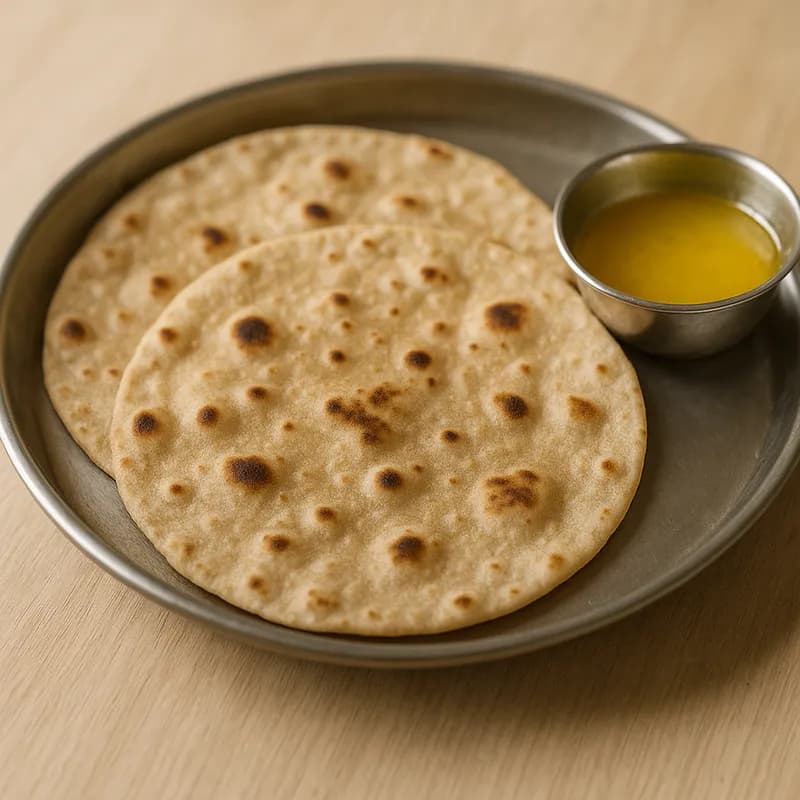 Better pick
Wheat Chapati
| Per usual serving | Rice | Roti |
|---|---|---|
| Glycemic index | 73 | 62 |
| Glycemic load per serving | 30 | 12 |
| Carbohydrates | 44 g | 30 g |
| Fiber | 0.6 g | 4 g |
| Protein | 4 g | 5.5 g |
| Sugars | 0.1 g | 0.5 g |
| Calories | 195 kcal | 170 kcal |
| Serving | 1 medium bowl (cooked) | 2 medium chapatis |
Highlighted values are the better of the two for blood sugar. Glycemic load counts the portion as well as the GI, so it is the fairer comparison when serving sizes differ.
What makes the difference
Roti made from whole-wheat atta keeps its bran, so it digests more slowly than polished rice. The bigger factor is portion: two rotis carry far fewer carbs than the heaped plate of rice most of us eat.
How to eat white rice with less of a spike
Cool cooked rice in the fridge for 12+ hours to increase resistant starch and lower effective GI. Reheating doesn't reverse this benefit.
How to eat wheat chapati with less of a spike
Use whole wheat atta without maida. Adding methi (fenugreek) leaves to the dough can help lower the glycemic response.
Common questions
Which is better for diabetes, rice or roti?
Roti is the better pick for blood sugar. It has a lower GI (62 vs 73), and a usual serving has a glycemic load of 12 against 30 for rice.
What is the glycemic index of rice and roti?
White Rice (Polished) has a GI of 73 (high) and Wheat Chapati has a GI of 62 (medium). Glycemic load is 30 for rice and 12 for roti, based on usual servings of 1 medium bowl (cooked) and 2 medium chapatis.
Safed chawal ya roti, sugar ke mareez ke liye kya behtar hai?
Roti behtar hai. Iska GI 62 hai, jabki safed chawal ka GI 73 hai. Phir bhi chhoti portion lein aur dal, sabzi ya dahi ke saath khayein.