Best Low-GI Indian Breakfasts
Mornings set the tone for your blood sugar. These traditional Indian breakfasts have a low to moderate glycemic index, so they release energy slowly instead of spiking your glucose. They are ranked from lowest GI upward.
Updated · ranked by glycemic index, lowest first · How we source our data
Pair any breakfast with a protein side (curd, sambar, egg or chutney) and skip the sugary chai to keep the overall glycemic load low.
At a glance: GI, GL and nutrition compared
| Food | GI | GL | Serving | Calories | Protein | Fiber |
|---|---|---|---|---|---|---|
| Besan Chilla | 35 | 6 | 2 medium chillas | 220 kcal | 11g | 5g |
| Pesarattu (Green Gram Dosa) | 38 | 7 | 1 large pesarattu | 140 kcal | 8g | 5g |
| Moong Dal Chilla | 45 | 9 | 2 medium chillas | 185 kcal | 11g | 4g |
| Ragi Dosa | 50 | 11 | 1 large ragi dosa | 145 kcal | 4.5g | 4g |
| Pongal | 55 | 16 | 1 medium bowl | 220 kcal | 6g | 3g |
| Muesli (Fruit & Nut) | 57 | 22 | 1 bowl (50 g with milk) | 260 kcal | 9g | 4g |
| Dal Pitha | 62 | 25 | 4 pithas | 230 kcal | 8g | 4g |
| Chakuli Pitha | 63 | 18 | 2 pithas | 180 kcal | 5g | 2g |
| Poha (Flattened Rice) | 64 | 16 | 1 medium plate | 200 kcal | 4g | 1.5g |
| Puttu | 65 | 29 | 1 cylinder | 250 kcal | 5g | 3g |
| Upma | 66 | 15 | 1 medium bowl | 190 kcal | 5g | 2.5g |
| Chura Dahi (Poha with Curd) | 66 | 32 | 1 bowl with curd and jaggery | 290 kcal | 8g | 1.5g |
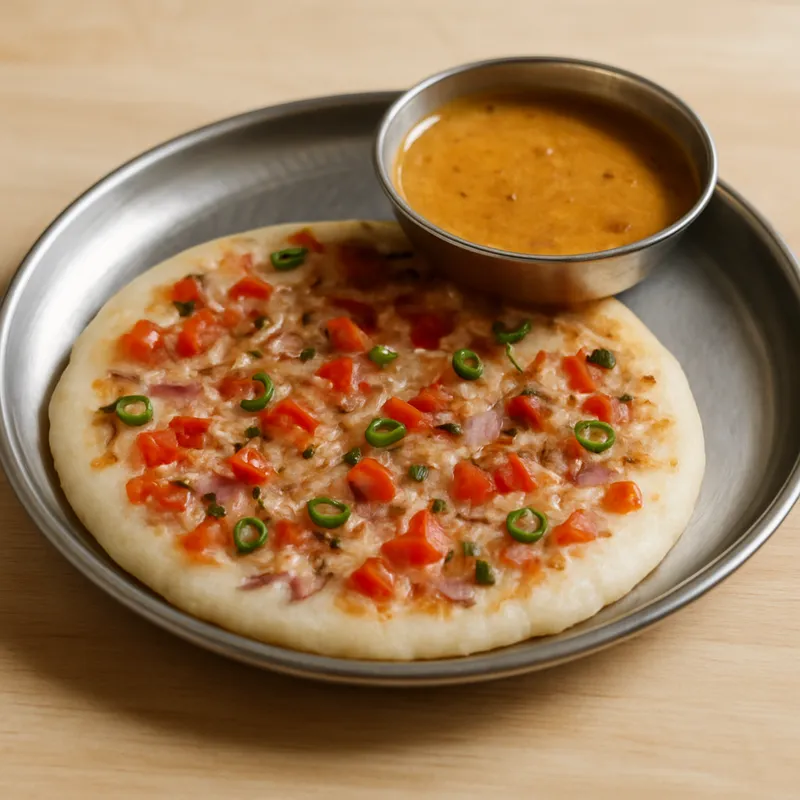
| Uttapam | 67 | 20 | 1 medium uttapam with toppings | 210 kcal | 6g | 2.5g |
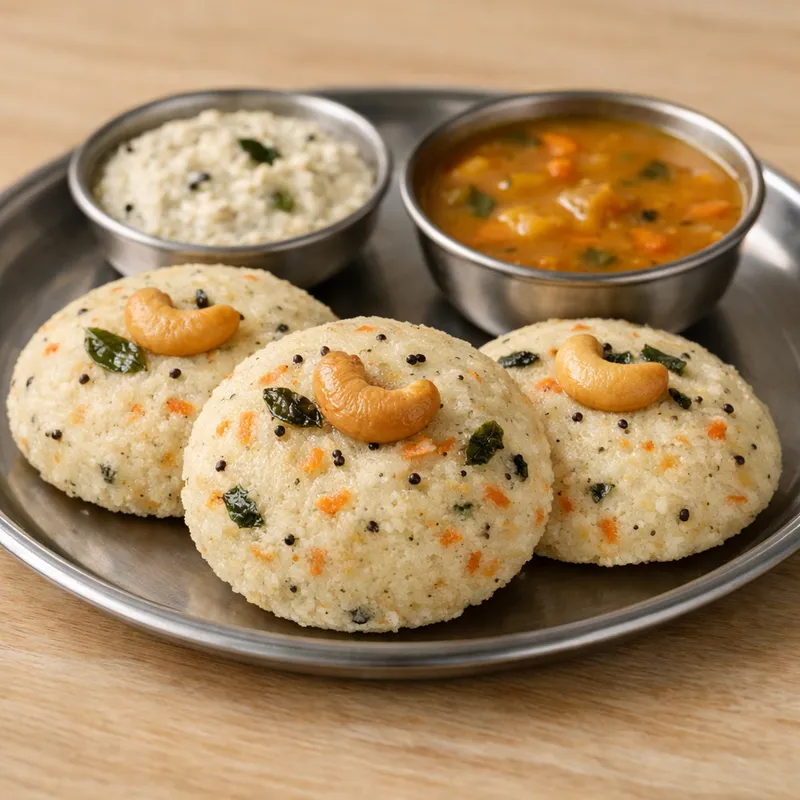
| Rava Idli | 67 | 24 | 3 idlis | 210 kcal | 6g | 2g |
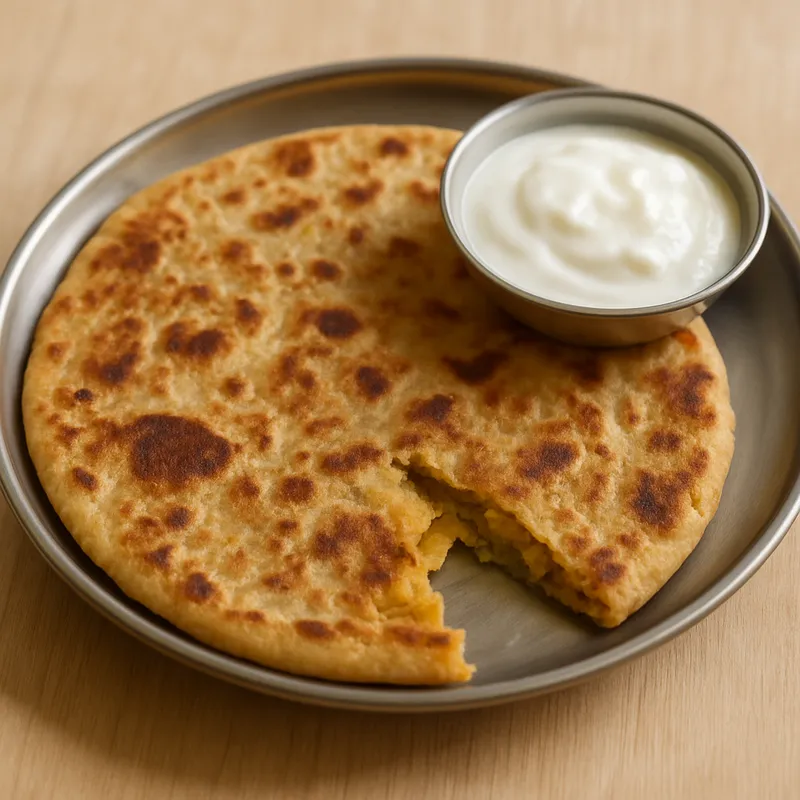
| Aloo Paratha | 68 | 18 | 1 aloo paratha | 280 kcal | 6g | 3g |
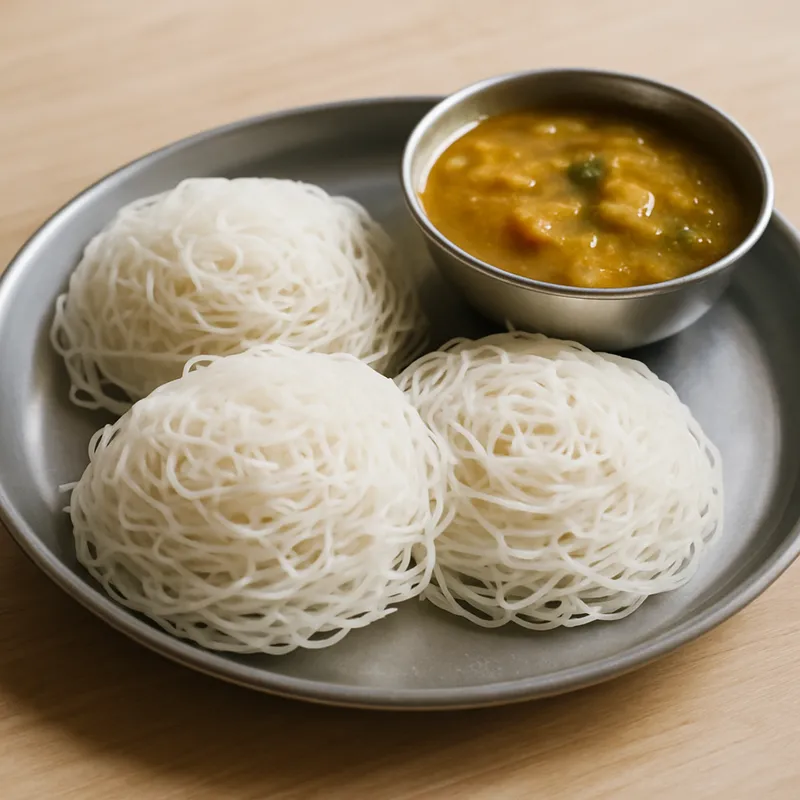
| Idiyappam (String Hoppers) | 68 | 23 | 3 string hopper nests | 200 kcal | 3.5g | 1.5g |
| Ven Pongal | 68 | 22 | 1 cup | 260 kcal | 8g | 3g |
| Idli | 69 | 14 | 3 medium idlis | 150 kcal | 4g | 1.5g |
| Appam | 69 | 18 | 2 medium appams | 175 kcal | 3g | 1.5g |
GL and nutrition are per serving. How these values are sourced
Looking for every option? See the complete list of low-GI Indian foods.
Explore each food
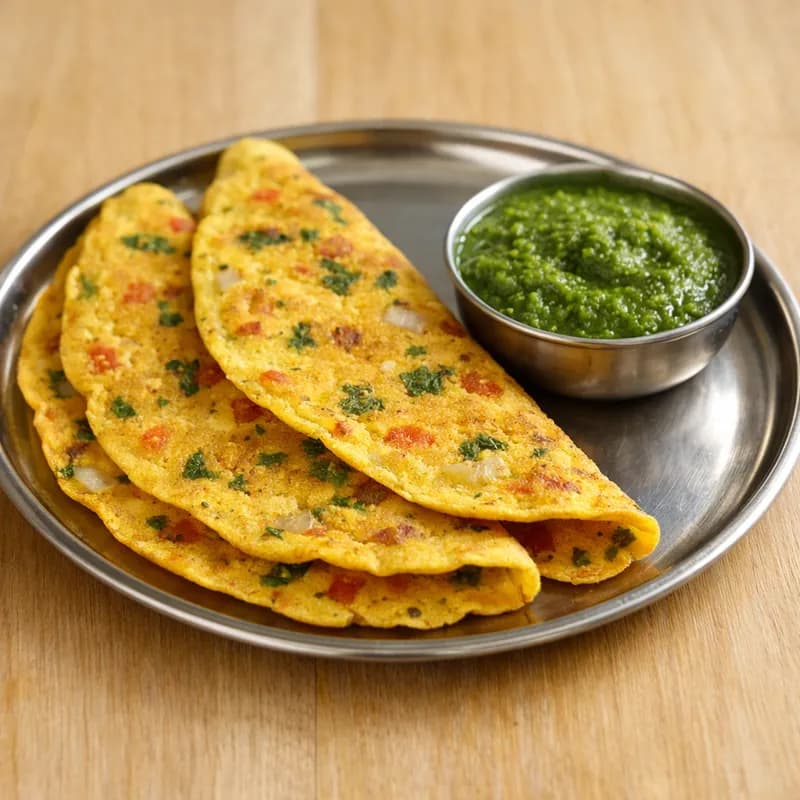 GI 35· Low
Besan Chilla
बेसन चीला · శెనగపిండి అట్టు
Savoury pancake of gram flour (besan) batter with onion, tomato, green chilli and coriander, cooked on a tawa with a little oil. Chickpea flour is high in protein and fiber, which keeps the GI low and makes it a filling breakfast.
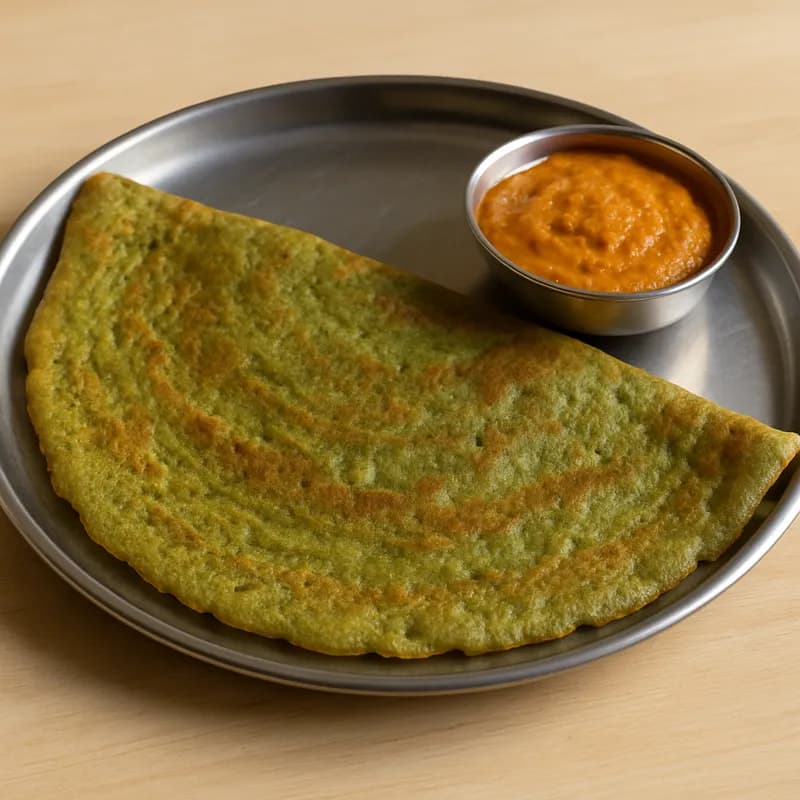 GI 38· Low
Pesarattu (Green Gram Dosa)
पेसरट्टू · పెసరట్టు
Andhra specialty dosa made from whole green gram. One of the best breakfast options for diabetics — high protein, low GI.
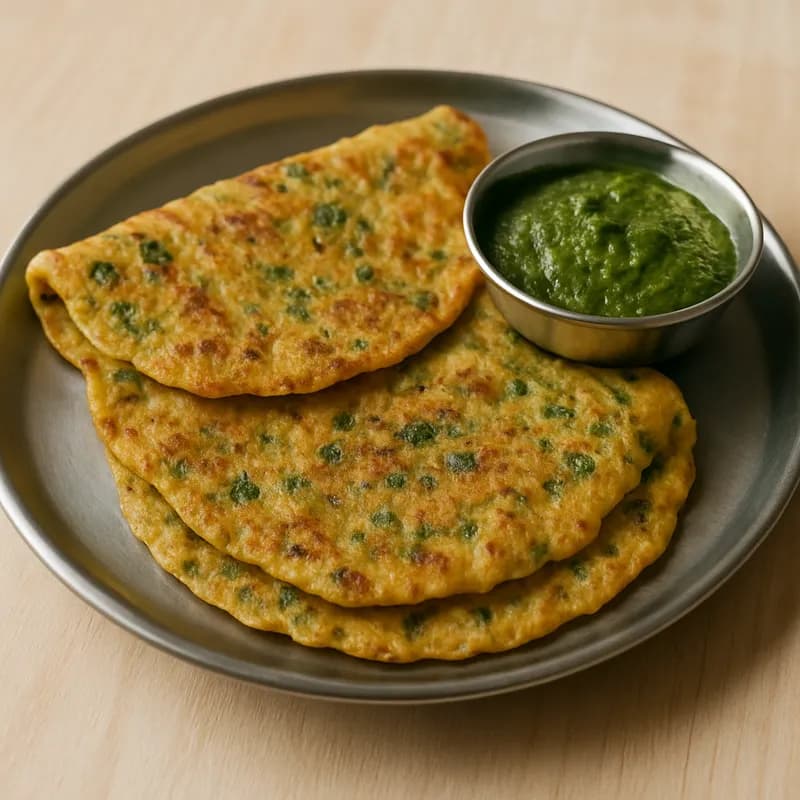 GI 45· Low
Moong Dal Chilla
मूंग दाल चीला · పెసర పప్పు చిల్లా
A savory pancake made from ground moong dal batter with herbs and spices, sometimes called a lentil cheela. High in protein and fiber with a low GI, making it an excellent diabetic-friendly breakfast.
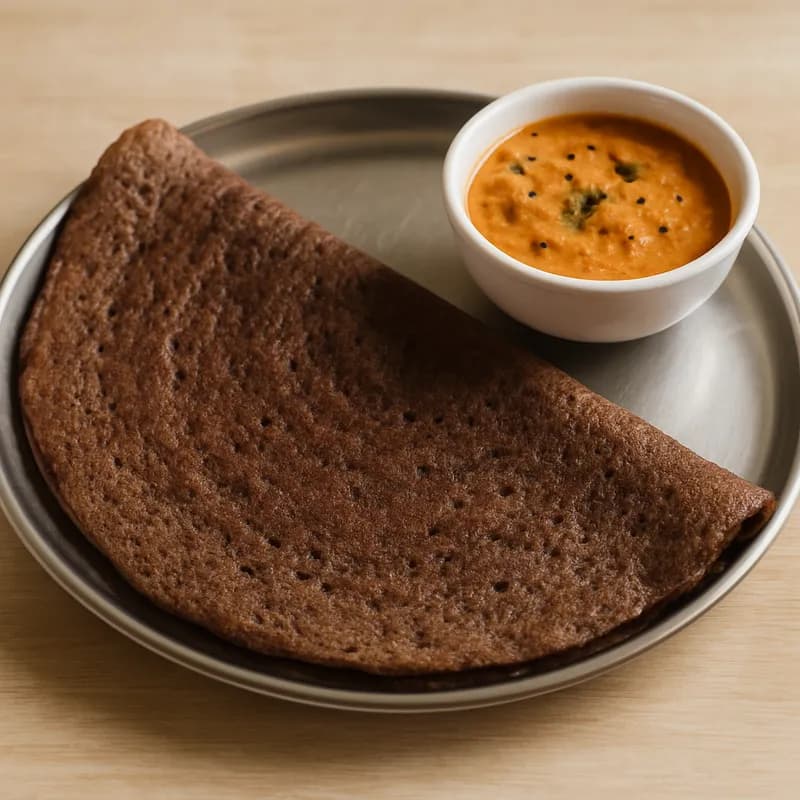 GI 50· Low
Ragi Dosa
रागी दोसा · రాగి దోస
Dosa made with ragi (finger millet) flour instead of rice. Significantly lower GI than regular dosa with added calcium and iron benefits.
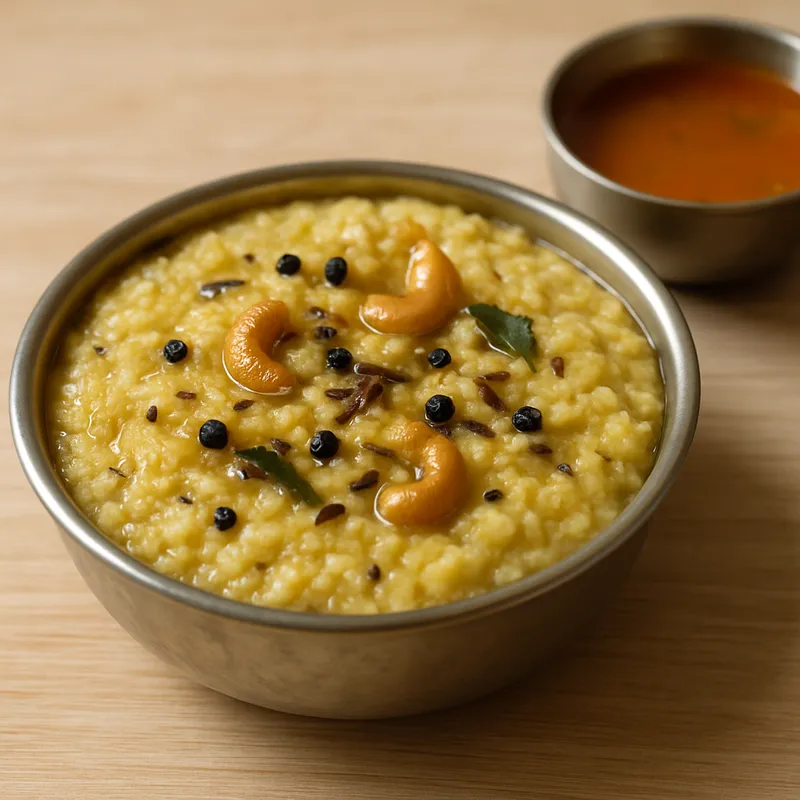 GI 55· Low
Pongal
पोंगल · పొంగలి
South Indian rice and moong dal porridge tempered with ghee, pepper, and cumin. The dal brings down the GI vs plain rice.
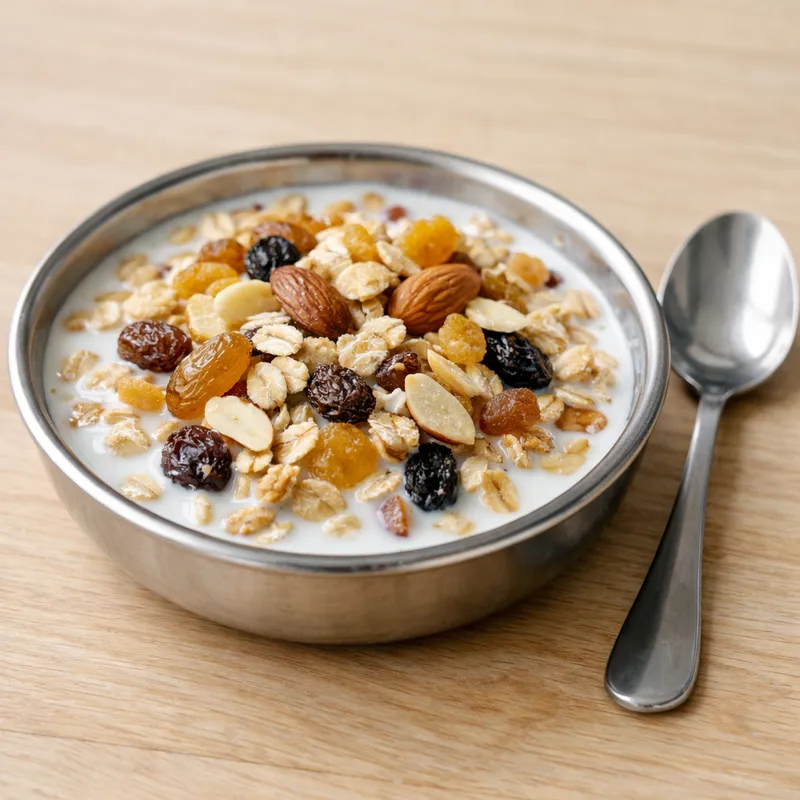 GI 57· Medium
Muesli (Fruit & Nut)
म्यूज़ली · మ్యూస్లీ
Packaged breakfast mix of rolled oats, flakes, dried fruit and nuts, eaten with milk or curd. It looks healthy, but many Indian brands add sugar, honey and cornflakes, which push the sugar up.
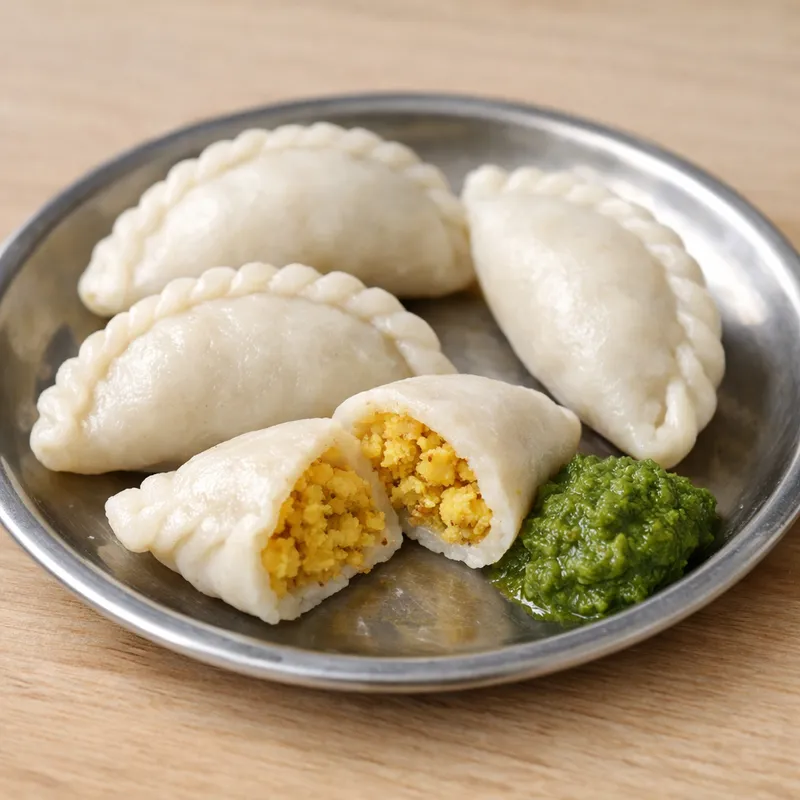 GI 62· Medium
Dal Pitha
दाल पीठा · దాల్ పీఠా
Bihari steamed dumplings of rice-flour dough shaped like gujiya and filled with a spiced chana dal paste, sometimes simmered in water instead of steamed. The dal filling adds protein, but the rice-flour shell is the larger part.
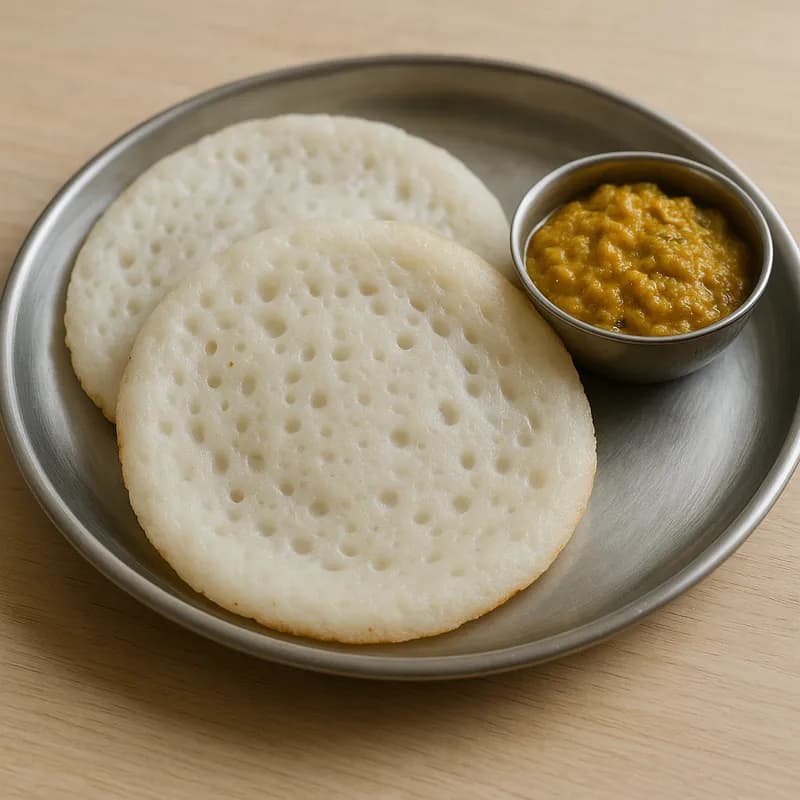 GI 63· Medium
Chakuli Pitha
चकुली पीठा · చకులి పీఠా
A soft Odia fermented pancake made from a ground rice and black-gram batter, similar to dosa. Overnight fermentation makes it lighter and slightly gentler on blood sugar than plain rice.
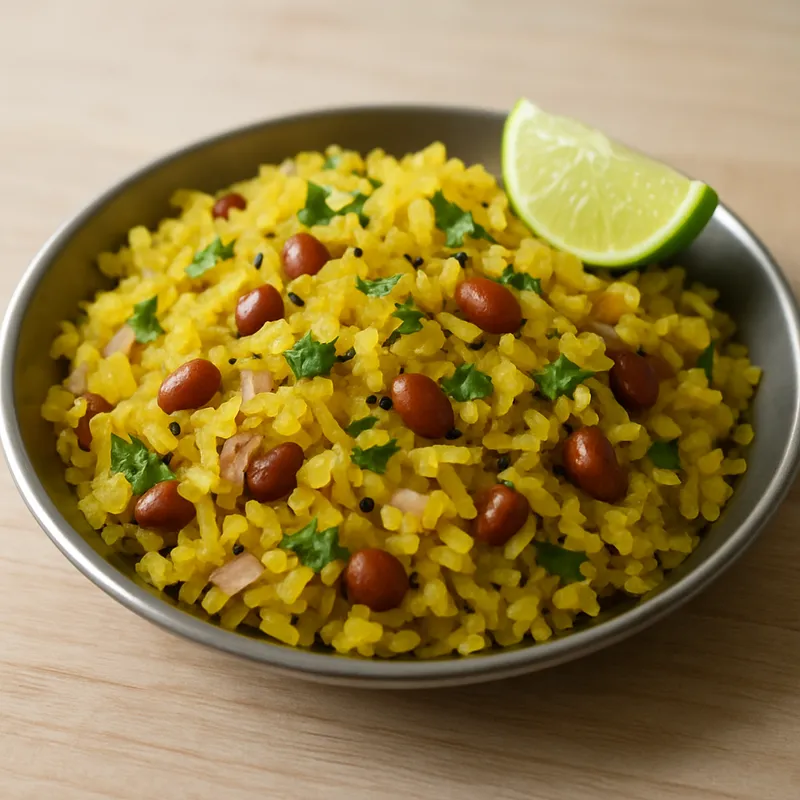 GI 64· Medium
Poha (Flattened Rice)
पोहा · అటుకులు
Flattened rice cooked with onions, peanuts, and spices. Popular breakfast in Maharashtra and Madhya Pradesh.
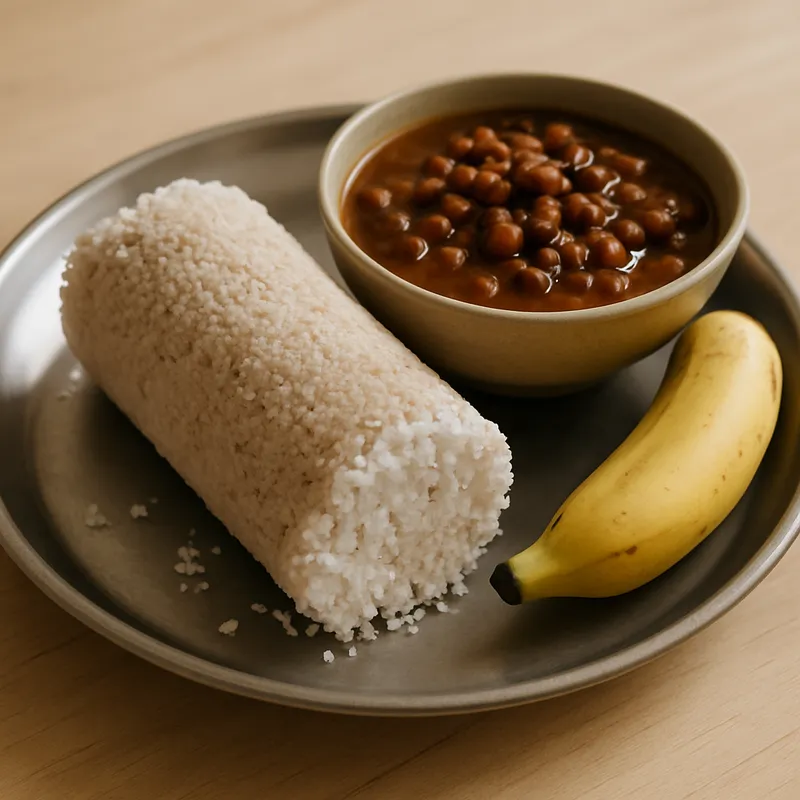 GI 65· Medium
Puttu
पुट्टू · పుట్టు
A Kerala breakfast of steamed cylinders of ground rice layered with grated coconut, usually eaten with kadala curry or banana. Rice-flour based, so its GI is moderate.
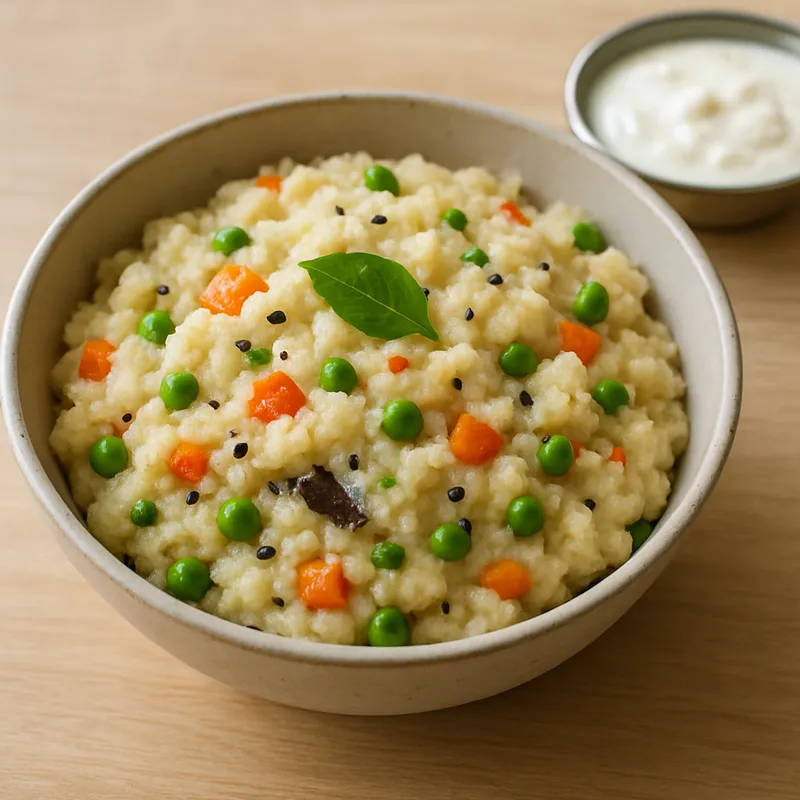 GI 66· Medium
Upma
उपमा · ఉప్మా
Savory semolina (rava) porridge with vegetables. Quick South Indian breakfast, but semolina has a relatively high GI.
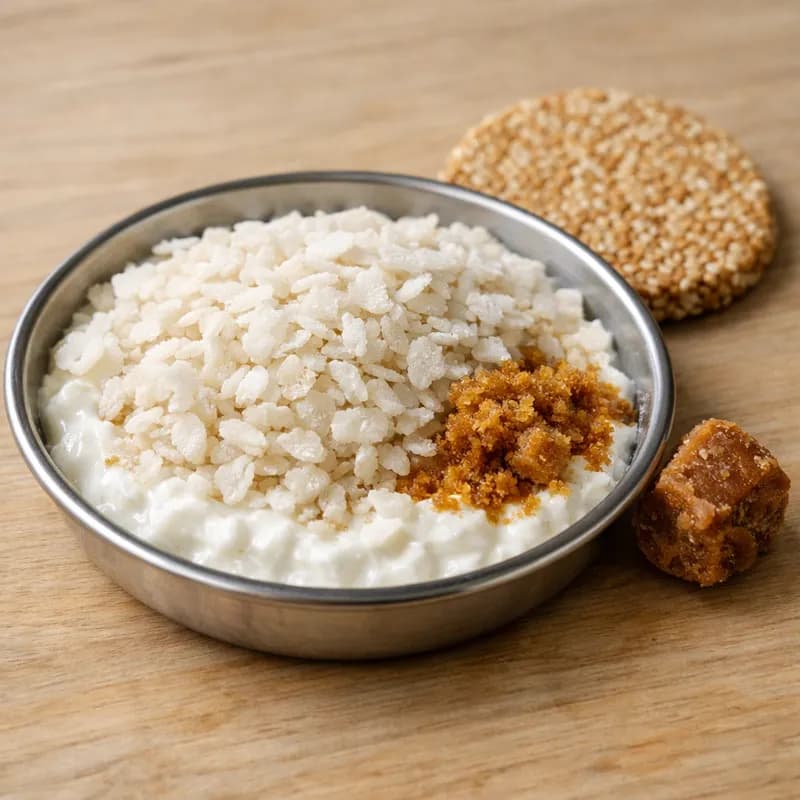 GI 66· Medium
Chura Dahi (Poha with Curd)
चूड़ा दही · చూడా దహీ
A Bihari breakfast and Makar Sankranti favourite of flattened rice (chura) soaked in curd and sweetened with jaggery or sugar, often eaten with tilkut and seasonal fruit. The curd helps, but chura and gud raise blood sugar quickly.
 GI 67· Medium
Uttapam
उत्तपम · ఉత్తప్పం
A thick, soft pancake made from fermented rice and urad dal batter, topped with onions, tomatoes and chillies. The lentil content and toppings moderate its GI relative to plain rice dishes.
 GI 67· Medium
Rava Idli
रवा इडली · రవ్వ ఇడ్లీ
Instant idli of roasted semolina (suji) and curd, tempered with mustard, curry leaves and cashews, made famous in Bengaluru. Without the fermented urad dal of regular idli, it is mostly refined wheat and digests faster.
 GI 68· Medium
Aloo Paratha
आलू पराठा · ఆలూ పరాఠా
Potato-stuffed wheat paratha, a North Indian breakfast staple. The potato filling raises GI above regular paratha.
 GI 68· Medium
Idiyappam (String Hoppers)
इडियप्पम · ఇడియప్పం
Steamed rice-flour noodles pressed into delicate nests (string hoppers / nool puttu), a staple breakfast in Kerala and Tamil Nadu. Made from refined rice flour, giving it a medium-high GI.
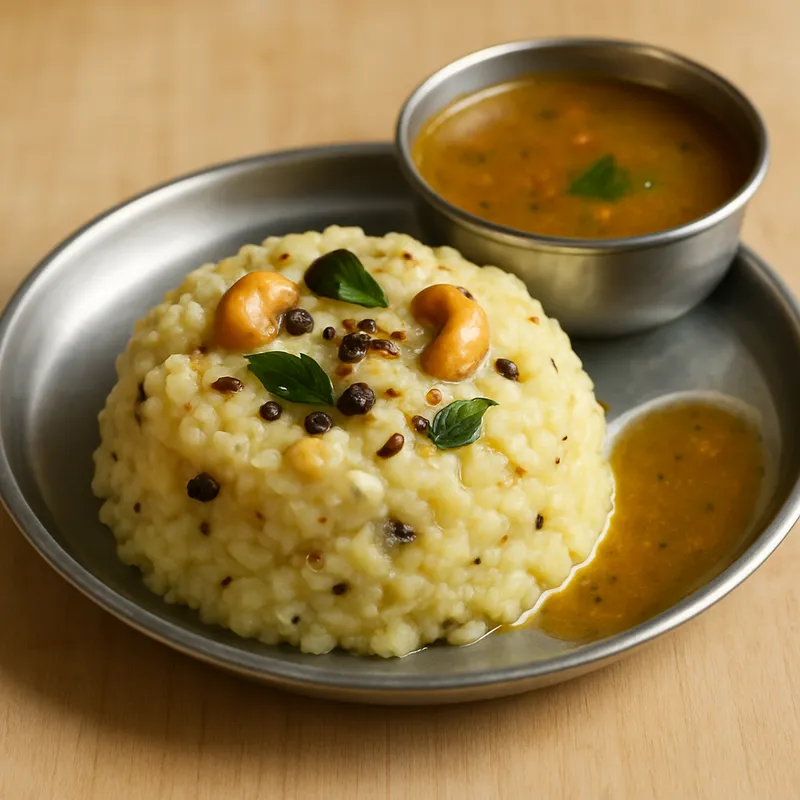 GI 68· Medium
Ven Pongal
वेन पोंगल · వెన్ పొంగల్
A comforting South Indian breakfast of rice and moong dal cooked together with pepper, cumin, ginger and ghee. The lentils add protein that softens its blood-sugar impact versus plain rice.
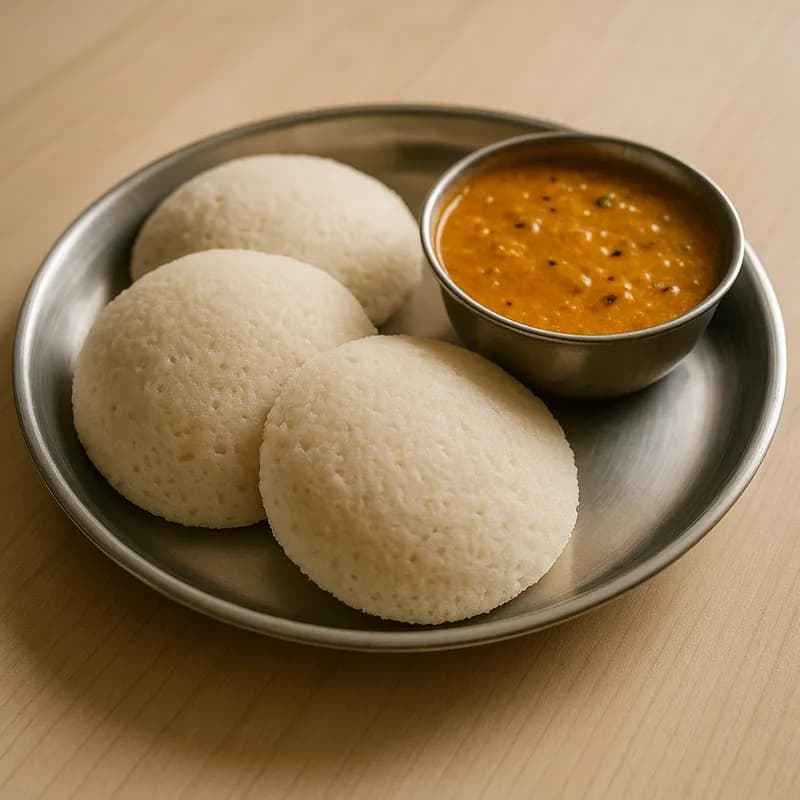 GI 69· Medium
Idli
इडली · ఇడ్లి
Steamed fermented rice and urad dal cake. South Indian staple breakfast. Fermentation slightly lowers GI and improves digestibility.
 GI 69· Medium
Appam
अप्पम · అప్పం
A soft, lacy fermented hopper from Kerala made with rice batter and coconut, with a fluffy centre and crisp edges. Fermentation moderates the GI but the refined rice base keeps it in the medium-high range.
Which is better? Side-by-side comparisons
Common questions
What is the best breakfast for diabetics in India?
Low-GI options like pesarattu (green gram dosa, GI 38), moong dal chilla (GI 45) and ragi dosa (GI 50) are excellent because they release glucose slowly. Idli and poha are medium GI, so they work in moderate portions — adding protein such as curd, sambar or egg lowers the glycemic load further.
Is idli good for diabetics?
Idli has a moderate GI and is steamed rather than fried, so in sensible portions (2–3 idlis) with sambar and chutney it is a reasonable breakfast for people managing blood sugar.
Which breakfasts should diabetics avoid?
High-GI breakfasts such as sabudana khichdi, cornflakes with milk and large servings of plain dosa or poori cause faster blood-sugar spikes and are best limited.
Sources
- Atkinson FS, Brand-Miller JC, Foster-Powell K, Buyken AE, Goletzke J. International tables of glycemic index and glycemic load values 2021: a systematic review. American Journal of Clinical Nutrition, 2021; 114(5): 1625–1632.
- University of Sydney, Glycemic Index Research Service — GI Database (glycemicindex.com).
- Longvah T, Ananthan R, Bhaskarachary K, Venkaiah K. Indian Food Composition Tables 2017. National Institute of Nutrition (ICMR), Hyderabad.
- ICMR–National Institute of Nutrition. Dietary Guidelines for Indians, 2024.
- ISO 26642:2010. Food products — Determination of the glycaemic index (GI) and recommendation for food classification.
Many Indian dishes have never been clinically tested, so some values are estimates — each food page shows whether its GI was measured or estimated. See our methodology.
This guide is for general educational purposes only and is not medical advice. Glycemic index values are approximate and individual blood sugar responses vary. Please consult your doctor or a registered dietitian before making changes to your diet — see our full disclaimer.